

First Edition · TACIR Program
Creativity, Digital Technologies & the Humanities
An international conference questioning the social, cultural, ethical, and environmental implications of creation in the age of platformization and immersive experience.
Rationale
Why this conference, why now
Contemporary digital transformations are profoundly redefining cultural, artistic and creative ecosystems on a global scale. The practices of creation, production, dissemination and access to knowledge are undergoing rapid, often disruptive, changes.
The exponential acceleration of innovations—artificial intelligence, immersive technologies, digital platforms—is reconfiguring relationships to works, narratives, identities and heritages, transforming rules of attention, memory and transmission.
"It is imperative to promote multi, inter and transdisciplinary research capable of linking research, creation, digital innovation and social inclusion."
Core Questions
The conference aims to question:
Sustainability of cultural development models in the era of platformization and fragmented consumption
Resilience of creative ecosystems facing structural vulnerabilities and global crises
The ability of digital technologies to reduce or exacerbate cultural and social inequalities
Conditions for equitable access to creativity, digital tools and immersive technologies
Governance, regulation, and protection of fundamental rights in digital creative spaces

Thematic Areas
Eight axes of inquiry
Interdisciplinary contributions across humanities, law, technology and public policy are particularly encouraged.
01 / 08

Theoretical Foundations & Interdisciplinary Approaches

Creativity & the Arts in the Digital Age

Digital Creative Processes & Practice Shifts

Situated Creation & Sustainable Cultural Territories

Equity, Inclusion & Social and Environmental Justice

Youth, Identities, Culture & Transmission

Creativity, Education & South-South Cooperation

Digital Sovereignty & Cultural Autonomy
Theoretical Foundations & Interdisciplinary Approaches
- Epistemologies of digital creativity
- Digital archives, memory and transmission
- Environmental responsibility and scientific innovation
Creativity and the Arts in the Digital Age
- Digital art, crea-tech and platformization
- Eco-creation and responsible innovation
- Dissemination, remuneration and new business models (NFT, blockchain, crowdfunding, etc.)
- Digital sobriety and engaged artistic practices
Digital Creative Processes and Practice Shifts
- Generative artificial intelligence and artistic intuition
- Immersive technologies and new forms of expression
- Material, cognitive and organizational barriers
- Mimesis, poetics and contemporary aesthetic reinventions
Situated Creation, Sustainable Cultural Territories and Ecosystems
- Territorial dynamics and anchored creation
- Valuation of tangible and intangible assets through digital and immersive technologies
- Co-creation and involvement of local communities
- Cultural resilience and territorial innovation
Equity, Inclusion, and Social and Environmental Justice
- Access to creativity and digital tools
- Diversity of narratives and representations
- Reducing digital inequalities
- Ethical governance and collective responsibility
Youth, Identities, Culture and Transmission
- Tangible, intangible and natural heritages
- Sustainable transmission and community reappropriation
- Participatory practices and cultural mediation
- Creative and dynamic youth of innovation
Creativity, Education and South-South Cooperation
- Innovative pedagogies
- Cultural mediation and transmission of knowledge
- Situated knowledge and creative responses to global challenges
- Interregional cooperation and research networks
Digital Sovereignty and Cultural Autonomy
- Cultural data governance
- Digital public policies
- Local technological alternatives
- Ethics of Artificial Intelligence
- Linguistic and cultural diversity in the digital space

Organization
Committees
Steering Committee
- Chair Pr. Chiraz Latiri
- Co-chair Pr. Samiha Khelifa
Organizing Committee
- Chair Dr. Ahlem Bouziri
Program Committee
- Program Chair Chiraz Latiri
- Communication Coordinator Imen Ben Romdhane
- Press Officer Chaima Laabidi abidishayma123@gmail.com
Scientific Committee
- Chair Prof. Raja Ben Slama
-
 Tunisia Amel Grami Faculté des Lettres, des Arts et des Humanités, Université de la ManoubaChiraz Latiri Institut des Arts Multimédias de la Manouba, Université de la ManoubaFaten Chouba Skiri Institut Supérieur des Beaux-arts de Sousse, Université de SousseFethi Rekik ECUMUS, Faculté des Lettres et des Sciences Humaines de Sfax, Université de SfaxHafsi Bedhiouifi Institut Supérieur de Documentation de Tunis, Université de la ManoubaHamida El Bour Institut de Presse et des Sciences de l'Information, Université de la ManoubaHatem Haddad Expert Entreprenariat IA, Université de la ManoubaHenda Haouala Institut des Arts Multimédias de la Manouba, Université de la ManoubaHichem Messoudi Institut supérieur des langues de Tunis, Université de CarthageIkbel Charfi Institut des beaux arts de Sfax, Université de SfaxImed Melliti Institut supérieur des sciences humaines de Tunis, Université Tunis El ManarJawhar Jammoussi Institut des Arts Multimédias de la Manouba, Université de la ManoubaJouhaina Gherib UNESCO Chair Holder, Institut Supérieur de Comptabilité et d'Administration des Entreprises, Université de la ManoubaKmar Bendana Institut Supérieur de l'Histoire de la Tunisie contemporaine, Université de la ManoubaLamia Ben Abid Faculté des Lettres, des Arts et des Humanités, Université de la ManoubaMoez Safta Institut Supérieur des Beaux-Arts de Tunis, Université de TunisMourad Sakli Institut Supérieur de Musique de Tunis, Université de TunisMyriam Catusse Institut de recherche sur le Maghreb contemporain (IRMC)Nahla Ben Amor Institut Supérieur de Gestion de Tunis, Université de TunisNooman Gmach École Supérieure des Sciences et Technologies du Design, Université de la ManoubaRaja Ben Slama Faculté des Lettres, des Arts et des Humanités, Université de la Manouba — Revue IBLARaja Fenniche Institut Supérieur de Documentation de Tunis, Université de la ManoubaRim Ben Smail Association Psychologues du MondeRym Zayani Institut des Arts Multimédias de la Manouba, Université de la ManoubaSadok Damak Faculté des lettres et des sciences humaines de Sfax, Université de SfaxSalma Ktata Ktari École Supérieure des Sciences et Technologies du Design, Université de la ManoubaSamiha Khelifa Manouba School of Engineering, Université de la ManoubaSihem Najar Institut de Presse et des Sciences de l'Information, Université de la ManoubaSoumaya Gharsallah Docteur en Muséologie, Experte en Musées et Patrimoine, TunisieTarek Kahlaoui MSB, South Mediterranean University, TunisZouhair Ben Jannet ECUMUS, Faculté des Lettres et des Sciences Humaines de Sfax, Université de Sfax
 -
 France Antoine Perrier Chargé de recherche au CNRS, Université Paris 1 Panthéon-Sorbonne, FranceChoukri Hmed UFR des Sciences humaines et sociales, Université Paris CitéDarine Saidi Université Paris 8Eric Vallet Université de StrasbourgFederico Tajariol Pôle Médiations et Pratiques Numériques, Université de Franche-ComtéKatia Boissevain Chargée de recherche CNRS, IDEAS UMR 3707Sylvie Mazzella Directrice de recherche CNRS (UMR MESOPOLHIS), Aix Marseille Université, France
 - InternationalImen Ben Youssef
 Ecole de design | Faculté de l'aménagement, Université de Montréal
Jihane Sfeir
Ecole de design | Faculté de l'aménagement, Université de Montréal
Jihane Sfeir Université libre de Bruxelles
Mohamed Salah Omri
Université libre de Bruxelles
Mohamed Salah Omri Faculty of Asian and Middle Eastern Studies, University of Oxford
Speakers
Invited Speakers
We are delighted to unveil the three speakers who will honor us with their participation in the invited talks of CNH 2026, held from 25 to 27 November 2026 in Hammamet. Three journeys, three perspectives, and three disciplinary worlds that will enrich the reflections and exchanges of this new edition.
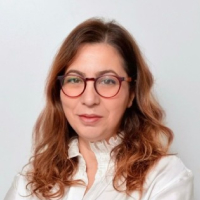
Nahla Ben Amor
Professeure en business computing, ISG de Tunis
« Vers une IA éthique et équitable »

Toma Tasovac
Director of the Belgrade Center for Digital Humanities (BCDH) and Director Emeritus of the Digital Research Infrastructure for the Arts and Humanities (DARIAH)
« After the Humanities? Interpretation and Authority in the Age of AI »
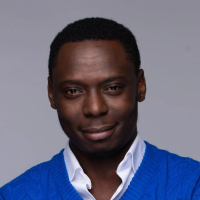
Souleymane Gassama
Sociologue, journaliste et écrivain — Producteur à RFI
« Le numérique décolonial, nouvel âge de l'illusion d'engagement. »
Workshops
Calls for Participation
Satellite workshops held alongside the conference, open to doctoral candidates and early-career researchers on a competitive, dossier-based selection.
« Critique scientifique & éthique »
Destiné principalement aux doctorant·e·s en SHS en première et deuxième année de thèse, inscrit·e·s dans les universités tunisiennes, cet atelier abordera la méthodologie de la recherche sous les angles de la critique scientifique, de la réflexivité et de l'éthique.
- Critique des sources et des approches méthodologiques
- Place de la subjectivité et de la voix du chercheur
- Démarche réflexive et auto-critique
- Enjeux éthiques de la recherche scientifique, notamment à l'ère de l'Intelligence Artificielle
Animé par
Pr. Mohamed Salah Omri — Université d'Oxford
Pr. Mohsen El Khouni — Université de Tunis El Manar
« Narration immersive et futurs du récit en réalité virtuelle »
Comment raconter une histoire lorsque le spectateur est au cœur du récit, capable d'agir, d'interagir, voire de dialoguer avec des personnages pilotés par l'intelligence artificielle ? Trois demi-journées d'expérimentation en réalité virtuelle et de réflexion collective sur les futurs du récit immersif, entre création, recherche et technologie.
- Jour 1 — La narration immersive en vidéo 360°. Immersion, mise en scène spatiale, gestion de l'attention, son et nouvelles formes de narration.
- Jour 2 — La narration interactive en réalité virtuelle. Interactivité, agence, présence, participation, narration environnementale et récits émergents.
- Jour 3 — Vers les récits du futur. Intelligence artificielle générative, personnages autonomes et conversationnels, théâtre immersif, co-création humain–machine et nouvelles formes de participation.
Animé par
Dr. Jorge Esteban Blein — Expert en VR/AR et narration immersive, Digital Creative Campus, Universidad Europea de Madrid
Participation
Registration & Fees
Payment details and deadlines will be communicated upon acceptance of proposals.
How to Register
- 1 Download the registration form below, fill it in with your personal and professional details.
- 2 Send the completed form to tacir.cnh@gmail.com.
| Tunisian & African Participants | Fees |
|---|---|
| Junior Researchers (PhD / Master's) | 300 TND |
| Junior Researchers (PhD / Master's) with accommodation in double room | 400 TND |
| Senior Researchers, Artists & Professionals | 500 TND |
| Senior Researchers, Artists & Professionals with accommodation in double room | 650 TND |
| Visitor (1 day) | 100 TND |
| Other Nationalities — Status | Fees |
|---|---|
| Junior (PhD / Master's) Researchers | 100 € |
| Junior (PhD / Master's) Researchers with accommodation in double room | 180 € |
| Senior Researchers | 200 € |
| Senior Researchers with accommodation in double room | 280 € |
Please Note
- Single room supplement: 60 TND (approximately 18 EUR) per night, at the participant's expense.
- The registration fees include access to keynote lectures, sessions and panels, lunches and coffee breaks, the conference proceedings, the documentary screening and debate evening "Crossed Perspectives", as well as the "Brokerage event" organized by Microcred.
- Accommodation: provided for two nights (November 25–26, 2026) at the conference venue, Diar Lemdina Hotel (4-star), Hammamet, Tunisia.
- At the participant's expense: dinners, international travel, local transportation, and airport transfers.
- Payment details and deadlines will be communicated upon acceptance of proposals.
Contact and information:
tacir.cnh@gmail.comCall for Proposals
Submit your contribution
The conference is open to senior and junior researchers (doctoral and master's students), as well as professionals and artists whose work falls within the proposed themes.
A Title
A clear and descriptive title for your proposed communication.
Author List
Maximum 3 authors, listed according to contribution.
Abstract — 400 to 500 words
In Arabic, French or English. Evaluated on scientific quality, originality and relevance to the thematic areas.
Five Keywords
Chosen to best reflect the scope and focus of your contribution.
Biographical Note (upon selection)
Maximum 100 words specifying institutional affiliation, status and main publications.
Accepted languages
العربية Français EnglishEvaluation & Publication
Selection process
The scientific committee reviews proposals based on scientific quality, originality and relevance. Accepted formats include articles, surveys, testimonials, and creative experiences.
Oral Presentation
Selected proposals will be presented orally at the conference in Yasmine Hammamet.
Digital Proceedings
Published in the digital proceedings of the CNH conference, edited by the IBLA journal.
Printed Thematic Issue
Pre-selected papers undergo peer-review for publication in the scientific journal IBLA.
Papers
Not to exceed 6 pages, submitted by 30 September 2026 following the Information for Authors guidelines.
Posters
For accepted posters, the extended abstract is due by 30 September 2026.
By the Numbers
Submission Highlights
Overview of the CNH 2026 submission and peer-review process.
150
submissions evaluated
by 39 reviewers
114
contributions accepted
76 % acceptance rate
39
reviewers
29 Tunisian · 10 international
Contribution Type
93
Oral 81.6 %
21
Posters 18.4 %
Participant Origin
81.6 %
Tunisian participants
18.4 %
International
Gender — Accepted Contributions
78.9 %
Women
21.1 %
Men
Scientific Profile
36.8 %
Senior
37.7 %
Junior
25.4 %
Doctoral
Ready to Submit?
Proposals (title + abstract of 400–500 words) are accepted in Arabic, French or English. The submission deadline is 15 May 2026.
Deadline · 15 May 2026 · Expired
Key Dates
Important Deadlines
Deadlines Extended
To give everyone the best conditions to complete their participation, all remaining submission and registration deadlines have been extended — see the updated dates below.
15 May 2026
Proposal Submission Deadline
ExpiredSubmit your title and abstract (400–500 words) through the official submission form. All three accepted languages welcome.
30 June 2026
Notification of Acceptance
ExpiredAuthors notified of the scientific committee's decision. Selected contributors receive the author guidelines.
15 September 2026
Registration Form Submission
ExpiredSubmit the completed registration form confirming your participation.
30 September 2026
Paper Submission
ExpiredNot to exceed 6 pages, submitted by 30 September 2026 following the Information for Authors guidelines.
30 September 2026
Extended Abstract Submission
ExpiredFor accepted posters, the extended abstract is due by 30 September 2026.
30 September 2026
Payment of Registration Fees
ExpiredPayment of registration fees, or sending of the purchase order (BC) for institutions.
25–27 Nov. 2026
Conference — CNH First Edition
Three days of presentations, roundtables, and exchanges at MEDINA – Mediterranea, Yasmine Hammamet, Tunisia.
Who Should Attend
Open to diverse voices
Researchers & Academics
Senior researchers, doctoral students and master's students working across humanities, law, technology, cultural studies and related fields. Junior researchers are warmly encouraged.
Artists & Creative Practitioners
Digital artists, designers, filmmakers, performers and creative professionals whose practice engages with digital innovation, eco-creation, immersive technologies or cultural heritage.
Professionals & Decision-Makers
Cultural industry professionals, public decision-makers, digital actors, and civil society representatives working on governance, regulation, cultural mediation and digital policy.
Particular attention is paid to contributions from youth, southern territories and trajectories conducive to sustainable impact initiatives.
Organization
Partners & Organizers
The Conference is convened by the AMAVI Association and its partners within the TACIR program.
TACIR Program
Talents – Arts – Creativity – Inclusion – Research is the framework program that convenes this International Conference on Creativity, Digital Technologies and the Humanities.
Contact
Get in touch
For questions about the call for proposals, conference logistics, or partnership opportunities, reach out to the TACIR program team.
tacir.cnh@gmail.comReady to Submit?
Proposals (title + abstract of 400–500 words) are accepted in Arabic, French or English. The submission deadline is 15 May 2026.
Deadline · 15 May 2026 · Expired